From Avi
Credit — the person, place or memory this came from
Food Stories · story · 6 min
Why Save Pasta Water? Exactly How Much to Use
Learn why pasta water makes sauce creamy, exactly how much to add to tomato, pesto, and cheese sauces, and the best time to use it.
by Mor B.
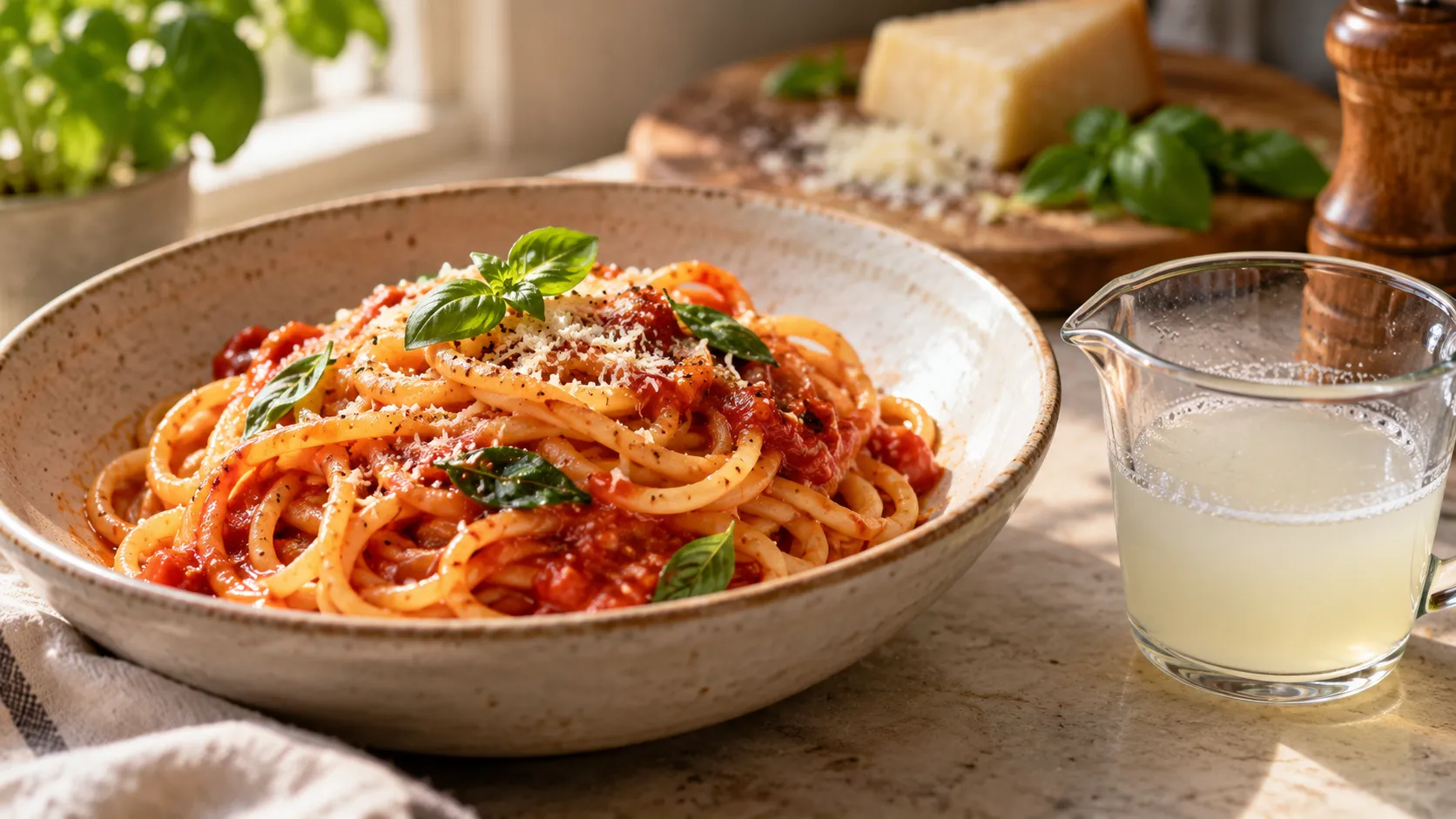
The next time you cook pasta, don't pour all that cloudy cooking water down the drain. You could be throwing away the easiest way to make your pasta sauce taste better.
Saving about 1 cup of pasta water per pound of pasta can help turn an ordinary sauce into something silky, glossy, and deliciously smooth. The secret is starch, which helps sauce coat your noodles instead of collecting at the bottom of your plate.
But how much pasta water should you actually add? And does the amount change depending on your sauce? Here's everything you need to know.
Why Is Pasta Water So Important?
When pasta cooks, it releases starch into the boiling water. That's why the water gradually turns cloudy.
This starch-rich liquid does more than keep pasta from drying out. It improves your sauce in three important ways.
1. It Helps Create a Creamy, Smooth Sauce
Oil and water naturally separate. However, the starch in pasta water helps stabilize the mixture when you vigorously toss the pasta with its sauce.
The result is a smoother, more cohesive sauce, particularly when cooking with olive oil, butter, or cheese.
2. It Helps Thicken Sauce
Starch can give sauces a little extra body without adding heavy cream or flour.
As you toss and gently cook the pasta, the starchy liquid combines with the other ingredients, helping create a glossy texture.
3. It Helps Sauce Cling to Pasta
Ever notice sauce sliding off your spaghetti?
Pasta water helps bring the sauce and noodles together. Combined with the starch remaining on unrinsed pasta, it creates a more even coating.
That means more flavor in every bite.
Exactly How Much Pasta Water Should You Add?
For 1 pound of dry pasta, reserve about 1 cup of cooking water before draining. You probably won't need all of it.
The amount you add depends on the sauce's ingredients, thickness, and how much liquid is already in the pan.
Use this quick reference as a practical starting guide.
Type of pasta sauceStarting amount per 1 lb dry pastaTomato or marinara¼ cupOlive oil and garlic¼ cupButter and cheese¼ cupPesto2 tablespoonsStore-bought jarred sauce2–4 tablespoons
These are suggested starting amounts, not results from controlled recipe testing. Adjust according to the sauce's texture.
Start with the recommended amount, toss thoroughly, and add another tablespoon or two if the pasta looks dry.
For smaller meals, reduce the starting quantity proportionally. For example, when cooking 8 ounces of pasta with tomato sauce, try 2 tablespoons first.
The goal isn't to make your sauce watery. It's to make it silky enough to coat every noodle.
When and How to Add Pasta Water to Sauce
Timing matters almost as much as quantity.
Pasta water works best when it becomes part of the sauce while you're finishing the pasta, rather than being poured over the finished dish.
Follow these simple steps:
- Reserve the water. About one minute before your pasta is ready, scoop out 1 cup of the cloudy cooking liquid.
- Drain the pasta without rinsing. Keep the starch coating on the noodles.
- Transfer pasta to the sauce. Ideally, do this when the pasta is still slightly firm.
- Add a little reserved water. Start with the amount appropriate for your sauce.
- Toss and finish cooking. Stir or toss for 30–60 seconds, adding more water as needed until the sauce coats the pasta evenly.
For cheese-based sauces, reduce or briefly remove the pan from the heat before adding finely grated cheese. Excessive heat can cause the cheese to clump or separate.
How to Make Pasta Water Extra Starchy
Not all pasta water contains the same amount of starch.
When you cook pasta in a large volume of water, the released starch becomes more diluted. Using less water can produce a more concentrated liquid that's particularly useful for butter-and-cheese sauces.
A traditional starting point is about 4 quarts of water per pound of dry pasta.
For a more concentrated result, some cooks use approximately 2 quarts, provided the pot is large enough and the pasta is stirred frequently to prevent sticking.
Salt your water moderately, especially if you're making a salty cheese sauce. Remember that different kosher salt brands vary in density, so equal tablespoon measurements don't always deliver equal saltiness.
What If You Forgot to Save Pasta Water?
Already drained the pot? You can make a useful substitute with cornstarch.
Mix ¼ teaspoon cornstarch with 1 cup of water, then heat the mixture until it boils and the starch thickens slightly. Stir well and add small amounts to your sauce as needed.
You can also add a small pinch of salt, but taste your sauce first.
This substitute mimics the thickening properties of starchy pasta water. It won't reproduce every characteristic of the original, but it can help rescue a sauce that needs more body.
Common Pasta Water Mistakes to Avoid
Even this simple technique can go wrong. Watch for these common mistakes.
- Adding too much at once: Excess water can dilute flavor and leave sauce pooling in the bowl.
- Rinsing hot pasta: Rinsing removes surface starch that helps sauce stick. Save rinsing for dishes where it's specifically needed, such as certain cold pasta salads.
- Adding oil to boiling water: Oil isn't necessary to prevent sticking. Stirring the pasta is more effective.
- Overheating cheese sauces: High heat can make cheese sauces grainy or oily.
- Assuming all pasta water behaves alike: Gluten-free and whole-wheat varieties may release different amounts and types of starch.
If your sauce becomes too thin, continue tossing it gently over appropriate heat to evaporate some moisture before adding anything else.
Can You Save Pasta Water for Later?
Yes. If you've reserved more than you need, cool the leftover water promptly and transfer it to a clean, airtight container.
Refrigerate it and use it within about 3 days, or freeze small portions in an ice cube tray for future sauces.
Stir or shake refrigerated pasta water before using it, since starch can settle as the liquid sits. Discard it if it develops an unusual smell or appearance.
Frequently Asked Questions About Pasta Water
Can You Add Too Much Pasta Water?
Yes. Too much pasta water can make sauce thin and bland. Start with a few tablespoons, toss, and increase gradually. You want the sauce to coat the pasta, not collect underneath it.
Does Pasta Water Work With Store-Bought Sauce?
Absolutely. A few tablespoons of pasta water can loosen thick jarred marinara or Alfredo sauce and help it coat noodles more evenly. Add it while warming the sauce and tossing the pasta.
Should Pasta Water Be Salty?
Yes, but not excessively. Lightly salted cooking water seasons both the pasta and the sauce. If you're using Parmesan, Pecorino Romano, or another salty ingredient, add salt cautiously and taste before serving.
Can You Use Gluten-Free Pasta Water?
Yes, although results vary. Rice-, corn-, and legume-based pastas release different starches and may produce water that's less suitable for certain sauces. Add small amounts and adjust based on texture.
The Bottom Line
Saving pasta water is one of the simplest ways to improve homemade pasta.
Reserve about 1 cup per pound, start by adding a few tablespoons to your sauce, and toss until everything looks smooth and glossy.
It's a small cooking habit that can make even a weeknight bowl of spaghetti taste noticeably better.
Share
Every page can be shared; the link carries an identifier (§9)
Billboard — Start creating your cookbook
The post's primary call to action, named in its brief